Foxify
Foxify is a crypto funded trading platform that provides up to $10,000 in funded capital with no evaluation phases and up to 80% profit splits.



What is Foxify?
Foxify is a crypto funded trading platform that lets users trade with real capital from day one. Users can get funded with up to $10,000 instantly, with no evaluation phases and no KYC required. Foxify integrates with multiple decentralized exchanges including dYdX, Kodiak, and others, offering access to 200+ markets spanning crypto, gold, silver, and indices with up to 100x leverage. Traders keep up to 80% of profits, with instant on-chain cashouts paid in USDC. The platform features a progression system where traders scale up funded capital through performance milestones. Foxify also offers the $FOX token, which can be staked to earn 30% of platform net fees, with over 15% of supply burned since inception.
Web3 dapps and developer tools related to Foxify
Discover blockchain applications that are frequently used with Foxify.
 SYMMIO

 Hotstuff
 Paradex
 Derivio

Developer resources from Alchemy
A guide to agentic finance in 2026
Agentic finance is the shift from software that informs financial decisions to software that can take action. Here's why crypto rails are the stack.
How Alchemy powers financial services onchain
A financial app is judged in milliseconds. Here's how Alchemy's RPC, Cortex, webhooks, and dedicated infrastructure power onchain lending, trading, payments, and market data.
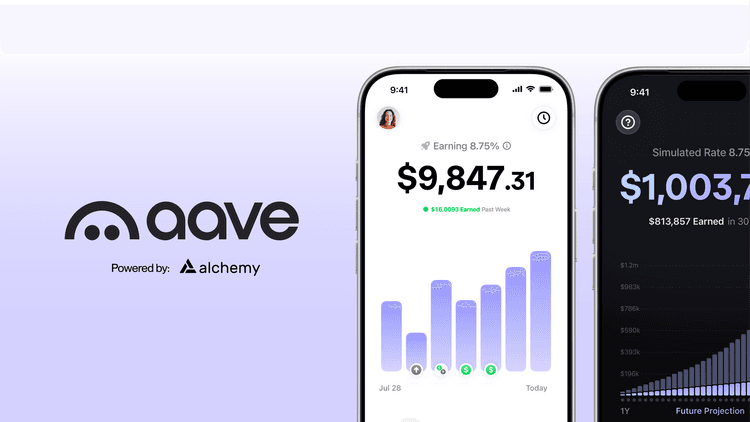
How Aave runs the largest lending protocol in DeFi across 20+ chains with Alchemy
Aave has run its traffic on Alchemy since 2021, powering protocol data across 20+ networks and a gasless consumer app, through V4, Cortex, and spikes above 2M CU/s.
Foxify alternatives
Explore web3 competitors and apps like Foxify.
 Derive

 Polynomial Protocol
 Siren
Siren
 Bullet
App store listings are independently reviewed and written by Alchemy using a combination of inbound submissions, editorial research, public project sources, and third-party directories, including ecosystem data from The Grid under the Open Database License, DefiLlama, DappRadar, Reown, and chain ecosystem pages.