The infrastructure behind the world's leading blockchain applications
Author: Alchemy
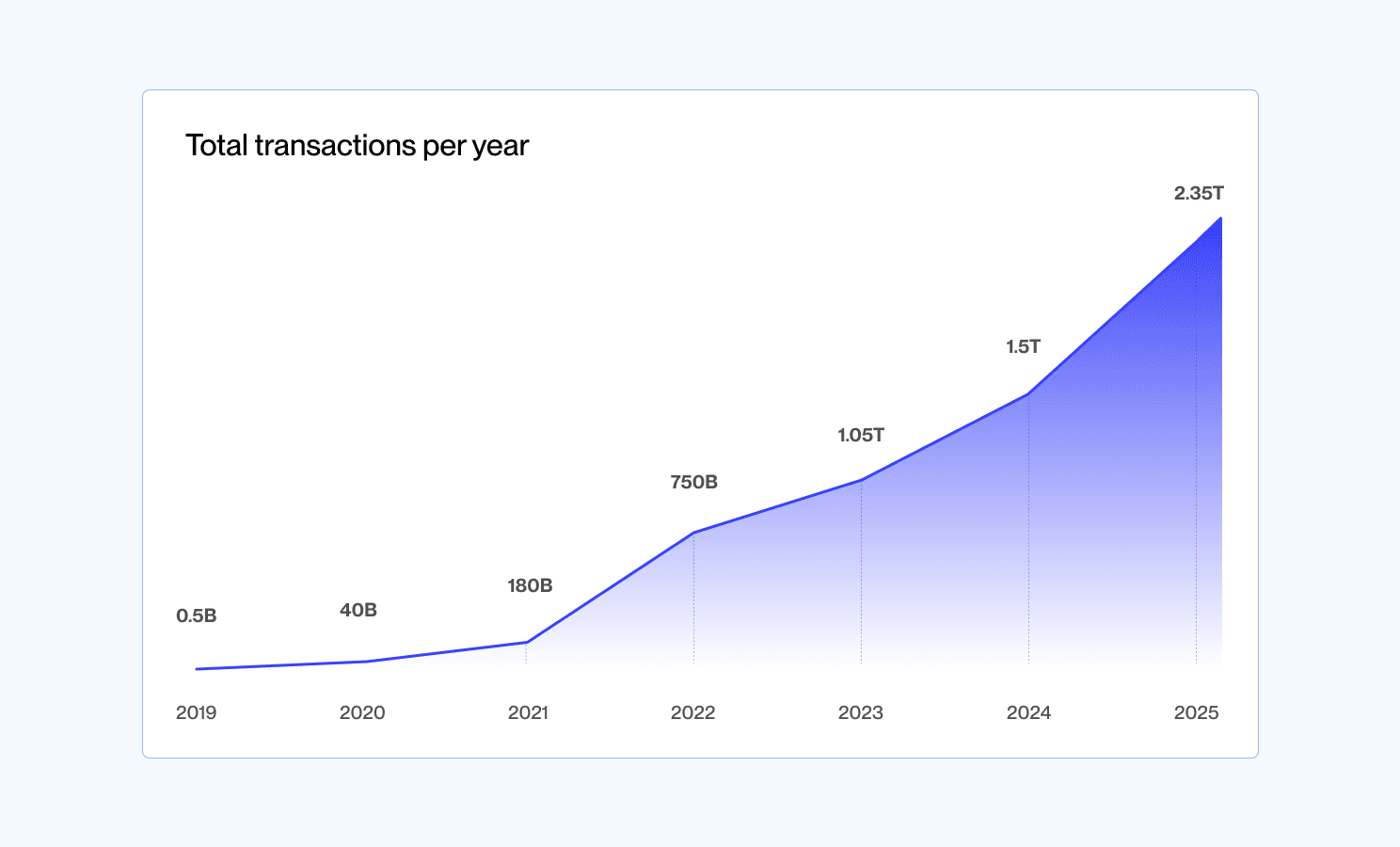
Since 2017, Alchemy has provided the blockchain infrastructure that enterprises and developers rely on to build, scale, and operate with confidence. Today, we power $1T+ in annual transactions, support 100+ chains, and serve customers across 260+ countries.
Every year, more of the world's critical applications move onchain. Alchemy's infrastructure has grown with that demand. We process billions of requests daily. As our customers' applications grow, our infrastructure scales to meet them — without requiring teams to rearchitect or migrate.
Trusted by industry leaders
The companies that depend on Alchemy represent some of the most demanding use cases in both crypto and traditional finance.
Our customers include Robinhood, Coinbase, Visa, Stripe, Circle, Polymarket, Uniswap — along with thousands of teams at every stage, from early-stage startups to publicly traded institutions.
These companies chose Alchemy because they need an infrastructure partner that performs at their scale, meets their security and compliance requirements, and is available when it matters most.
99.99% uptime especially under pressure
Reliability is measured in the moments that matter. In October 2025, crypto markets experienced their largest single-day liquidation event — approximately $19 billion wiped in hours. Infrastructure providers across the industry went down. Transactions failed and users couldn't close positions.
Alchemy maintained the highest uptime in the industry throughout the event.
For current public performance data, compare RPC provider benchmarks across latency, success rates, and failed requests.
Consistent performance during market stress isn't incidental. It reflects eight years of engineering investment in redundancy, failover systems, and operational discipline, manifested in the world's first intelligent blockchain engine, Cortex. Our 99.99% uptime means fewer than 53 minutes of total downtime per year — a standard we've maintained through multiple market cycles.
Build vs. Buy: Blockchain Infrastructure
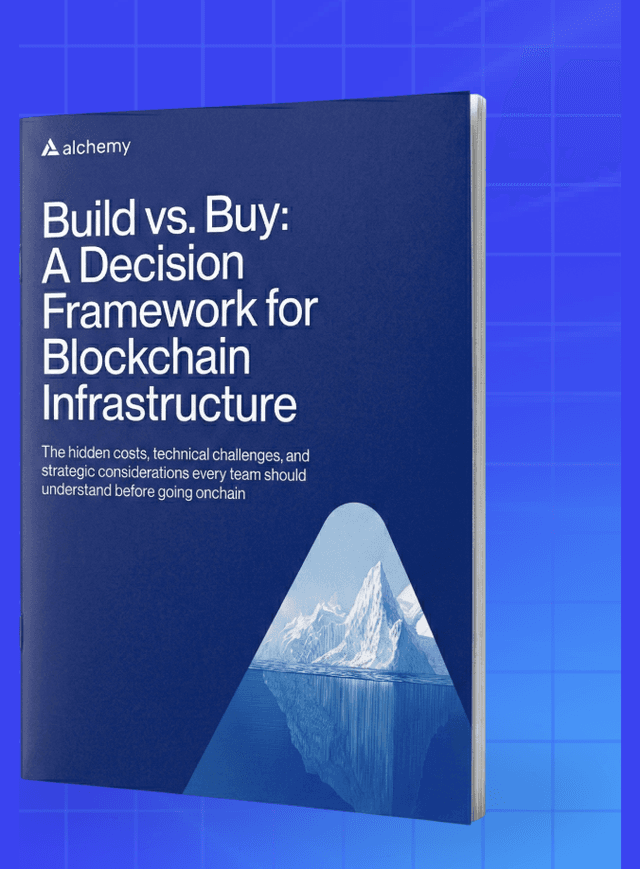
Before you hire an infra team, read this: building in-house can cost $850K–$1M+ a year before you serve a single production request. See the full cost breakdown.
Across every major vertical
Alchemy serves teams across the full spectrum of onchain applications:
- Financial services — stablecoin infrastructure, payment processing, tokenized assets
- DeFi — trading, lending, liquidity protocols
- Consumer applications — wallets, gaming, NFT platforms, loyalty programs
- Enterprise and Web2 — brands and institutions entering crypto for the first time
We've processed over 600 million gasless transactions, reducing the complexity of onchain interactions for end users and enabling applications that feel indistinguishable from traditional software. Our platform reaches** 100 million+ end users** through the applications we power.
Eight years of reliability and innovation at scale
Why teams choose Alchemy
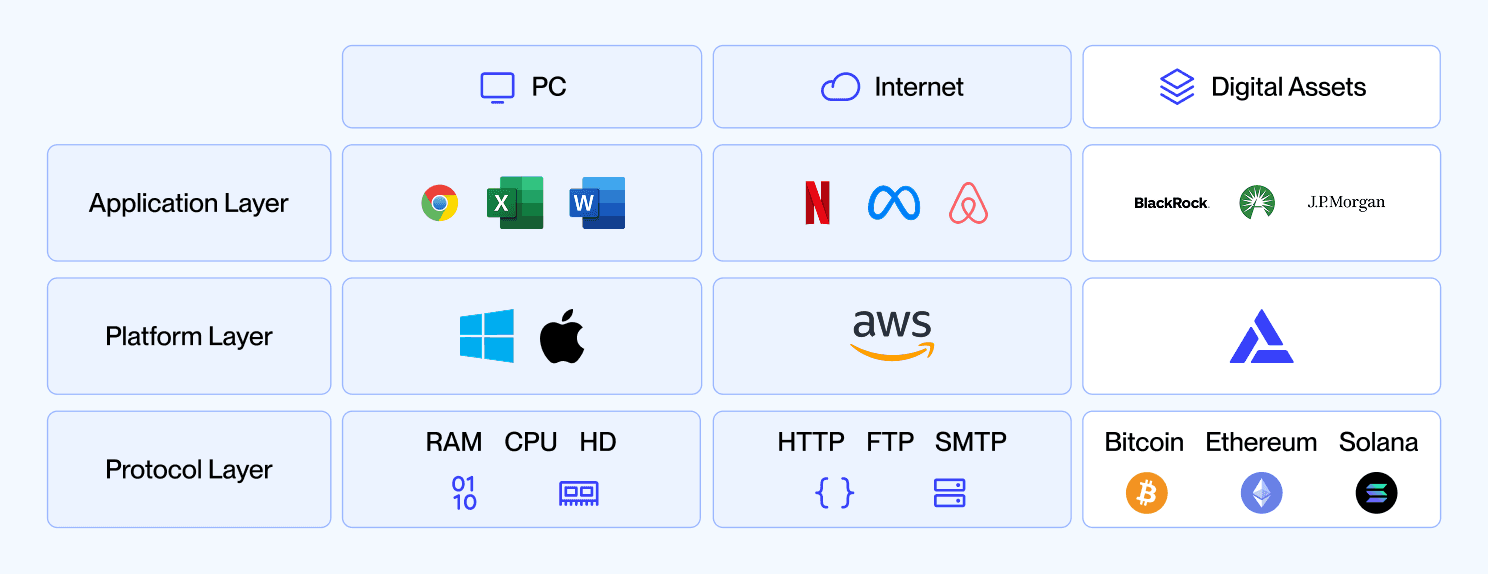
Infrastructure decisions are high-stakes and long-term. Teams choose Alchemy because they need a partner they can depend on — one that scales with their growth, maintains performance through market volatility, and continues to invest in the platforms and chains that matter.
That's what we've delivered for eight years. And it's what we'll continue to deliver.
- Get started for free
- Talk with our team for enterprise needs, specialized pricing, integration support and more
Frequently asked questions
What is Alchemy?
Alchemy is a blockchain infrastructure provider that has been powering enterprise and developer applications since 2017, processing $1T+ in annual transactions across 100+ chains and serving customers in 260+ countries.
What types of companies use Alchemy?
Alchemy serves industry leaders including Robinhood, Coinbase, Visa, Stripe, Circle, Polymarket, and Uniswap, along with thousands of teams ranging from early-stage startups to publicly traded institutions across financial services, DeFi, consumer applications, and enterprise Web2 companies.
What is Alchemy's uptime guarantee?
We maintain 99.99% uptime, which equates to fewer than 53 minutes of total downtime per year, and have maintained the highest uptime in the industry through multiple market cycles including major liquidation events.
How many chains does Alchemy support?
We support 100+ blockchain networks, enabling developers and enterprises to build applications across every major blockchain ecosystem.
What is Cortex?
Cortex is Alchemy's intelligent blockchain engine, built on eight years of engineering investment in redundancy, failover systems, and operational discipline to ensure consistent performance during market stress.
How many requests does Alchemy process?
We process billions of blockchain requests daily and have powered over 600 million gasless transactions, reaching 100 million+ end users through the applications built on our infrastructure.
What industries does Alchemy serve?
Alchemy serves financial services (stablecoin infrastructure, payments, tokenized assets), DeFi (trading, lending, liquidity), consumer applications (wallets, gaming, NFTs, loyalty programs), and enterprise Web2 brands entering crypto.
How does Alchemy handle high-traffic market events?
During the October 2025 crypto market liquidation event that wiped approximately $19 billion in hours, Alchemy maintained the highest uptime in the industry while other infrastructure providers experienced outages.
Alchemy Newsletter
Be the first to know about releases
Sign up for our newsletter
Get the latest product updates and resources from Alchemy
By entering your email address, you agree to receive our marketing communications and product updates. You acknowledge that Alchemy processes the information we receive in accordance with our Privacy Notice. You can unsubscribe anytime.

Related articles
Turn Claude Code into an onchain research agent
Turn Claude Code into an onchain research agent with the Alchemy CLI. Trace token launches, deployer wallets, and admin keys by asking the right questions.
The Cortex router: how we pick the fastest healthy node for every request
Getting a request to a nearby region is table stakes. What happens next, choosing which node answers, is where Cortex does its work.
Best blockchain infrastructure for AI agents (2026)
Compare the best blockchain infrastructure for AI agents in 2026: agent frameworks, agent-ready RPC and data providers, and the standards that connect them.