Why trading teams choose Alchemy for low-latency RPC
Author: Alchemy
An onchain trade starts with market data that has to land before the price moves. The order then has to execute, even in a volume spike, and the money has to reconcile with the chain afterward.
Prediction markets, exchanges, DEX infrastructure, trading apps, and market data providers run that work on Alchemy. They choose us for low latency under peak load, reliable infrastructure on the chains they trade, and engineers who help tune their stack.
Why do trading teams choose Alchemy?
Trading teams choose Alchemy because we cover both parts of the job: low-latency reads and writes when the market moves, and a complete, reliable record when money settles, even at peak volume.
Think of it as a trading firm's two desks: the front office needs speed, and the back office needs certainty. Both reach the chain through an RPC node, the server that answers an app's requests to read blockchain data and submit transactions.
How does Alchemy keep latency low under real load?
We route every request at scale to reliably serve teams, and for teams with extreme peaks, we tune routes and capacity around their traffic. Cortex, the engine underneath our platform, moves traffic off a degraded path before traders notice.
Polymarket chose us after testing several RPC providers. During the 2024 U.S. presidential debates, it served 125,000+ concurrent users, and $3.3 billion in bets moved through it across the election. We rerouted its requests based on p99 latency (the slowest 1% of requests) and added two dedicated node fleets. Cortex cut latency on its critical data ingestion from about 250ms to about 100ms.
"Working with Alchemy has been nothing short of essential. The personal support, the quick turnaround on our feature asks, and the attention to our scale—Alchemy consistently goes above and beyond. They're not just an infra provider. They're part of our team."
— Rodrigo, Head of Platform, Polymarket · Read the Polymarket case study
0x routes liquidity for decentralized exchanges and its own Matcha trading app. After testing the available platforms, it concluded we were the only one it could count on. On Alchemy, it generates quotes in under a second with 99.9% uptime.
How does Alchemy keep trading infrastructure reliable?
We run the parts of the stack trading teams would rather not operate: HyperEVM nodes on Hyperliquid, Solana gRPC streams, and the archive and trace data exchanges use for settlement.
Valantis builds trading products on Hyperliquid. Its self-hosted HyperEVM node went down several times a week, and each failure could block traders from opening or closing dollar-cost averaging (DCA) positions. After moving to our HyperEVM Node, Valantis reports 100% successful RPC requests.
"We need our infrastructure to just work so we can stay focused on building a great trading experience. Alchemy has given us a more reliable foundation and a team that is quick to help when we need it."
— Deven Matthews, CEO, Valantis · Read the Valantis case study
Bitget, which serves 125 million+ users, credits a deposit only when independent sources agree, and we are one of those sources across 9 networks. Its own full nodes keep only about the last 128 blocks, so it relies on our archive data (full chain history) and trace methods (step-by-step transaction replays). Over 30 days, Bitget sent us 25 million+ requests with zero errors.
How does Alchemy's team help trading teams tune their infrastructure?
Most teams in this post named support as a reason they chose us. Our engineers work on the problem directly, alongside each team's own engineers.
Struct, which streams market data to trading terminals and agents, benchmarked several providers before choosing us. It runs on our Node API and WebSockets and leans on our support as it adds networks.
"Partnering with Alchemy provides Struct with the stability our pipelines require. Pair that with hands on developer support allowing us to focus on serving our customers to the best of our abilities."
— Elliot, CEO, Struct · Read the Struct case study
Start building trading use cases on Alchemy
We build for low-latency reads and writes under peak load, plus the archive, trace, and streaming data the back office depends on, across the chains you trade.
Get started or talk to our team.
Frequently asked questions
Which RPC provider is best for Hyperliquid?
Alchemy runs a HyperEVM Node that follows standard Ethereum node specs, so existing services can move over without a new operating model. Valantis migrated its Hyperliquid trading backend from a self-hosted node to Alchemy one service at a time and reports 100% successful RPC requests since. Test any provider on your own methods first.
What should a Solana trading app look for in an RPC provider?
Look for gRPC streaming alongside request-response RPC. Alchemy's Solana gRPC is Yellowstone-compatible, so existing clients move over with a URL change. Each subscription fans out across multiple upstream nodes, missed data backfills after a reconnect, and endpoints run in US East, US West, EU Central, and Asia-Pacific.
Why do crypto exchanges use more than one RPC provider?
A single provider is a single point of failure for user funds. Bitget runs its own nodes and credits a deposit only when independent sources agree, with Alchemy as one of those sources. Over 30 days, Bitget sent Alchemy 25 million+ requests across 9 networks with zero errors.
Which RPC providers support archive and trace data?
Alchemy provides archive data plus trace and debug methods such as trace_block and debug_traceBlockByNumber. The Trace API is available on pay-as-you-go and Enterprise plans. Standard full nodes keep only recent blocks, roughly the last 128, so they cannot rebuild older transactions. Bitget uses this data to verify deposits.
Alchemy Newsletter
Be the first to know about releases
Sign up for our newsletter
Get the latest product updates and resources from Alchemy
By entering your email address, you agree to receive our marketing communications and product updates. You acknowledge that Alchemy processes the information we receive in accordance with our Privacy Notice. You can unsubscribe anytime.

Related articles
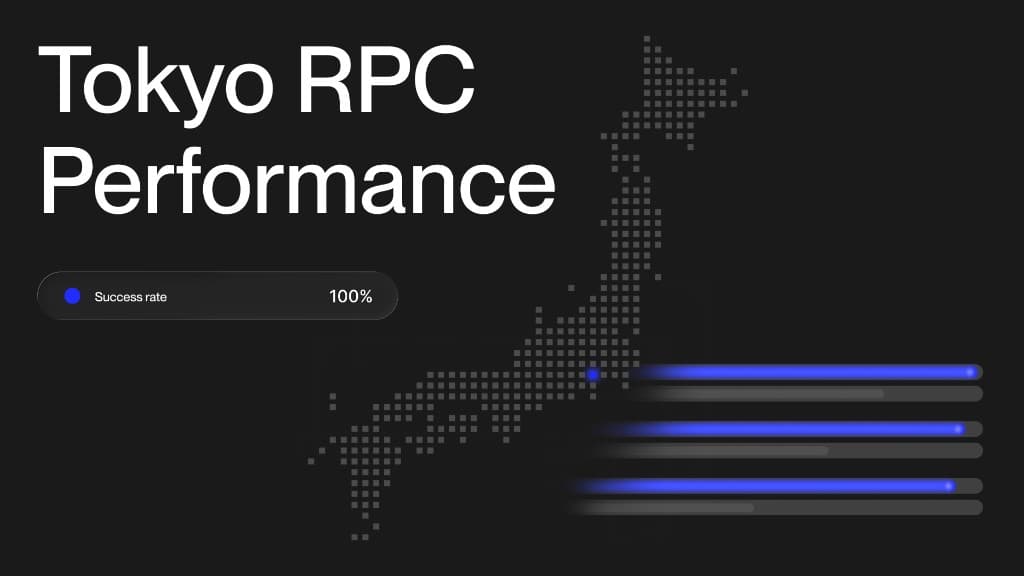
Which RPC provider should you build on in Tokyo?
We benchmarked five of the RPC providers serving Tokyo across five chains. Here is how they compare, and where the differences matter for latency-sensitive teams.
Architecting Solana RPC reads for industry-leading speed and reliability
Alchemy has the lowest Solana read latency: 9.21 ms, about 26% faster than the next provider.
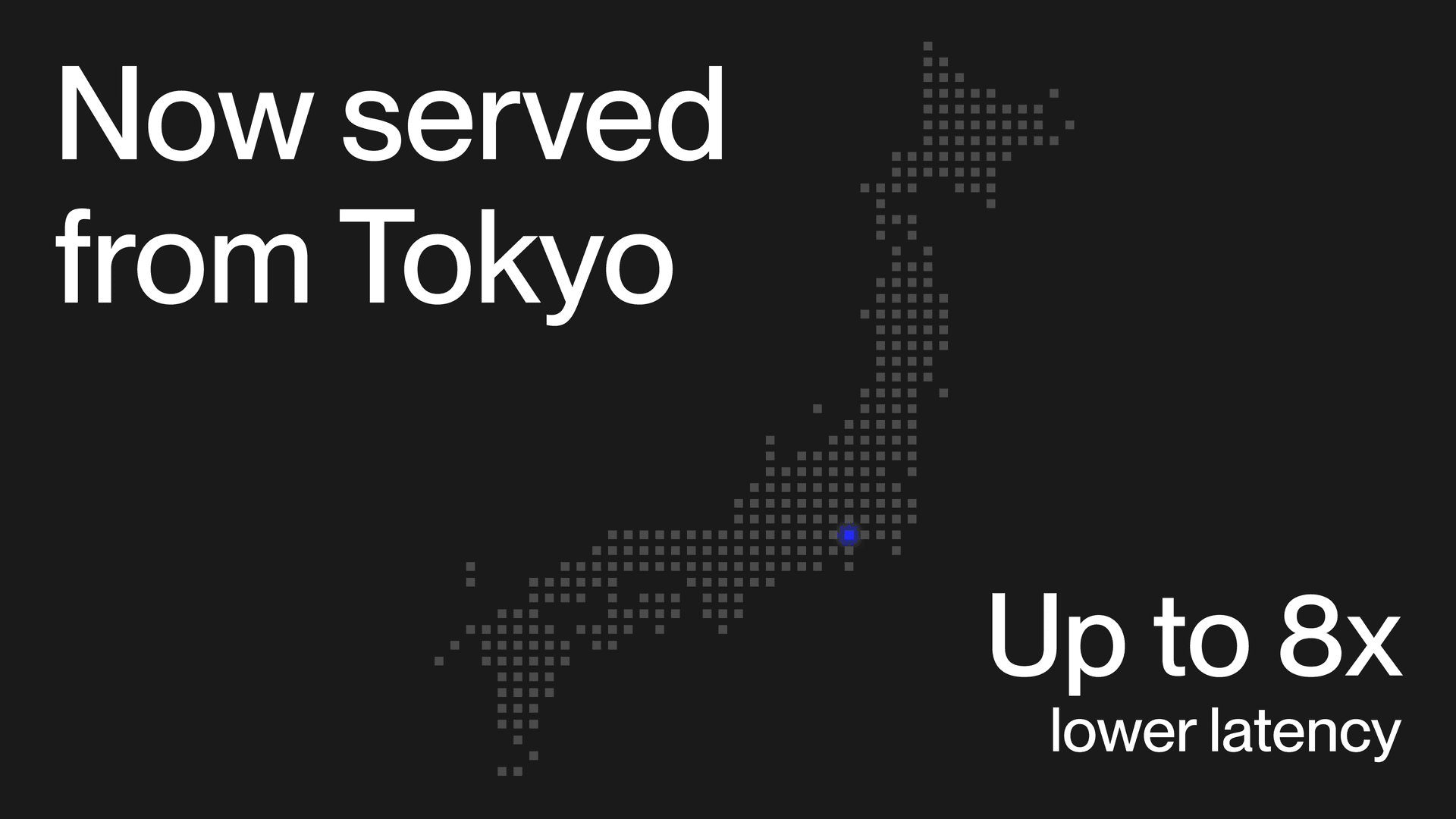
Alchemy launches Tokyo regional support
Node RPC, WebSockets, and Dedicated Clusters are now live in Tokyo, with up to 8x lower median latency for requests from Japan.