FreezeRadar
FreezeRadar screens wallet addresses for stablecoin issuer blacklists, sanctions exposure, and freeze-related risk before funds are received.



What is FreezeRadar?
FreezeRadar is a wallet risk screening service focused on freezeable assets such as USDT, USDC, PAXG, and XAUt. It reads freeze, unfreeze, and burn events directly from issuer contracts, checks addresses against official sanctions lists including OFAC, UK, UN, and EU lists, and flags exposure to mixers, scam clusters, and other risky counterparties. Scans cover networks including Ethereum, Tron, BNB Chain, Polygon, and Solana. A free tier allows a limited number of scans per day, while paid plans add deep scans, watchlists, counterparty alerts, history, exports, and bulk scanning, and an API is available for integrations. FreezeRadar states that its results are informational and do not predict whether an issuer or exchange will freeze funds.
Web3 dapps and developer tools related to FreezeRadar
Discover blockchain applications that are frequently used with FreezeRadar.
 GoPlus Security


 Blockaid

 Web3 Antivirus
 ScamSniffer

Developer resources from Alchemy

Smart Wallet APIs for financial institution requirements
The stablecoin market has surged to over $240 billion and is projected to hit $2 trillion by 2028. Major banks are launching stablecoins while Congress passed the GENIUS Act. Smart Wallet APIs help financial institutions integrate onchain

Inside Alchemy's enterprise-grade security infrastructure
When enterprises evaluate blockchain providers, security is paramount. Here's how our security team—built from experts at major banks, federal agencies, and leading cloud providers—delivers infrastructure that meets enterprise standards.
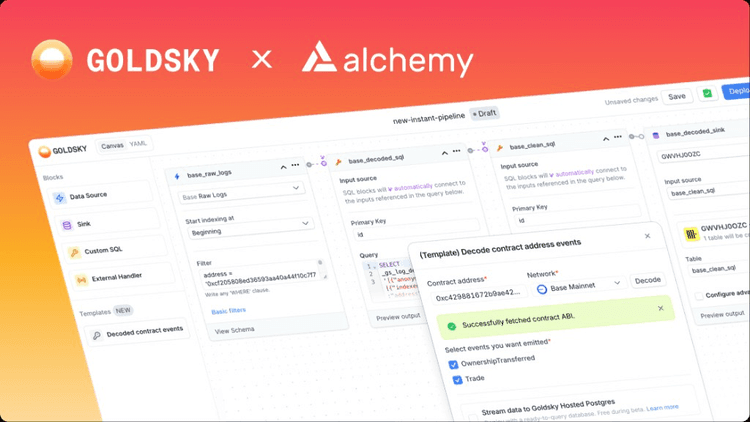
How Goldsky kept transactions flowing with zero downtime
Goldsky migrated its Compose bundler and paymaster to Alchemy and built a provider abstraction layer that makes failover a single environment variable change—no code deploy, no downtime.
FreezeRadar alternatives
Explore web3 competitors and apps like FreezeRadar.
 Sygnum Web3 Recovery
 Cobo Argus

 ApprovalWatch

 Kevlar
App store listings are independently reviewed and written by Alchemy using a combination of inbound submissions, editorial research, public project sources, and third-party directories, including ecosystem data from The Grid under the Open Database License, DefiLlama, DappRadar, Reown, and chain ecosystem pages.