Orderly Network
Orderly Network is a permissionless infrastructure layer that lets builders launch a perpetuals DEX on any chain with shared liquidity and zero infra cost.






What is Orderly Network?
Orderly Network is a permissionless trading infrastructure layer that enables builders to launch a branded perpetuals DEX on any chain with shared liquidity, a central limit order book (CLOB), and zero infrastructure cost. Builders can connect via SDK, white-label (OrderlyOne), or API, customize branding and fees, and earn revenue from every trade on their frontend from day one. Orderly is live on Ethereum, Arbitrum, Base, Solana, and 14+ additional chains, with over $30B in cumulative trading volume and 1M+ users across the ecosystem. Its shared orderbook powers CEX-grade depth for every builder without bootstrapping, and user funds remain on-chain with no counterparty risk. Orderly also supports agentic infrastructure with MCP server integration, enabling AI agents to interact with its trading API and SDK.
Web3 dapps and developer tools related to Orderly Network
Discover blockchain applications that are frequently used with Orderly Network.
 Particle Network
 Whal3s
 Sequence
 Venly
Venly
Developer resources from Alchemy
Webhooks vs WebSockets vs gRPC
Three protocols dominate real-time data delivery. Here's how webhooks, WebSockets, and gRPC differ, when each one breaks down, and how to choose between them.

How to make a memecoin on Solana: a step-by-step guide
Learn how to make a memecoin on Solana from a launchpad or DIY.
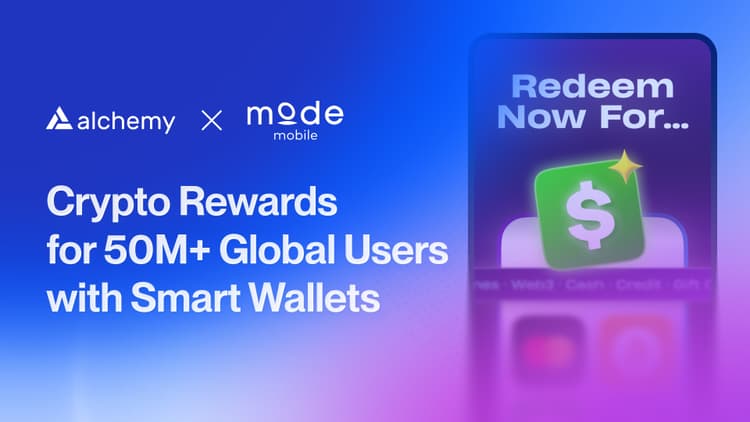
Mode Mobile brings crypto rewards to 50+ million users with smart wallets
Dive into how Mode Mobile's users earn over $325 million across 170+ countries, with 2+ million five-star reviews on Google Play. Made possible with Smart Wallets.
Orderly Network alternatives
Explore web3 competitors and apps like Orderly Network.
 Alchemy Notify
 Almanak
 Wagmi
Wagmi
 Keep3r Network
App store listings are independently reviewed and written by Alchemy using a combination of inbound submissions, editorial research, public project sources, and third-party directories, including ecosystem data from The Grid under the Open Database License, DefiLlama, DappRadar, Reown, and chain ecosystem pages.