Polygon zkEVM
Polygon zkEVM is an EVM-equivalent zero-knowledge rollup scaling solution, now part of the Polygon CDK for deploying custom blockchains.
Transaction Fees, Open-source
What is Polygon zkEVM?
Polygon zkEVM is an EVM-equivalent ZK rollup scaling solution that is now a core component of the Polygon Chain Development Kit (CDK). CDK lets institutions deploy custom blockchains on production-ready rollup infrastructure, with every chain connecting to Agglayer by default for built-in cross-chain interoperability and unified liquidity. All existing smart contracts, developer toolings, and wallets work seamlessly on Polygon zkEVM. It uses zero-knowledge proofs to lower transaction costs and increase throughput while inheriting the base-layer security of Ethereum. CDK supports multiple operating modes including Sovereign, Validium, and full zkRollup configurations. Developers can build apps on zkEVM in the same manner as building on Ethereum — simply switch the RPC URL endpoint to a zkEVM RPC node provider to access higher throughput and lower fees. No special toolings or new wallets are required.
Web3 dapps and developer tools related to Polygon zkEVM
Discover blockchain applications that are frequently used with Polygon zkEVM.
 Alchemy
 PancakeSwap

 QuickSwap
 Balancer

Developer resources from Alchemy

What are layer 2 blockchains?
Explore the world of L2 blockchains and how this scaling solution is driving onchain innovation.
Launching support for account abstraction on Zora and Frax
We are excited to announce Account Abstraction support for Frax and Zora, two new layer 2 blockchains built on top of Optimism’s Superchain ecosystem.
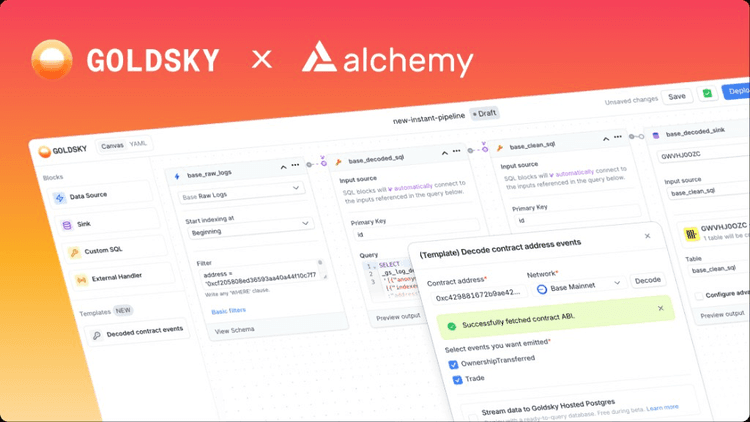
How Goldsky kept transactions flowing with zero downtime
Goldsky migrated its Compose bundler and paymaster to Alchemy and built a provider abstraction layer that makes failover a single environment variable change—no code deploy, no downtime.
Polygon zkEVM alternatives
Explore web3 competitors and apps like Polygon zkEVM.
 Base
Base Arbitrum
 Aurora
 Kroma
KromaApp store listings are independently reviewed and written by Alchemy using a combination of inbound submissions, editorial research, public project sources, and third-party directories, including ecosystem data from The Grid under the Open Database License, DefiLlama, DappRadar, Reown, and chain ecosystem pages.