Venly NFT API
Venly's NFT API enables anyone to mint and manage NFT collections across multiple blockchains.



What is Venly NFT API?
Venly NFT API is a no-code Web3 tool that lets developers deploy smart contracts, mint NFTs, and manage fungible tokens directly in user wallets across multiple blockchains. Developers can create smart contracts to mint NFTs and fungible tokens directly in user wallets. The API also allows developers to update NFT metadata and store the media and images associated with the NFTs on Venly's storage solutions. Venly's no-code NFT API simplifies deployment of smart contracts, eliminating the need for a blockchain developer. With Venly NFT API, the client is always the contract owner. Supports ERC721 and ERC1155 token standards.
Web3 dapps and developer tools related to Venly NFT API
Discover blockchain applications that are frequently used with Venly NFT API.
 Footprint Analytics
 NFT Price Floor
 Mnemonic
 Ankr
Ankr 

Developer resources from Alchemy
Best blockchain APIs for building autonomous onchain agents
A comparison of the top blockchain API providers for autonomous onchain agents, covering agent-native features, chain coverage, and the capabilities that matter when your user is a machine.
Alchemy expands support on Stellar with Data APIs and a path to Tier-1 validation
Alchemy is working toward becoming a tier-1 validator on Stellar and has added three indexed Data APIs for transfer history, token balances, and NFT holdings on mainnet and testnet.
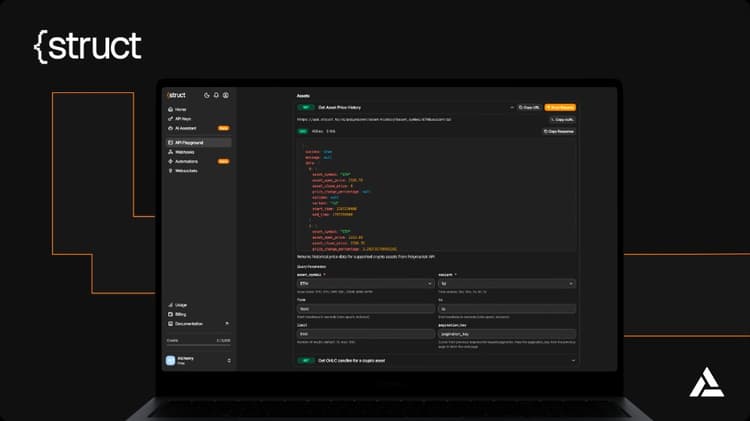
How Struct is building the data layer for onchain finance with Alchemy
Struct uses Alchemy node APIs and WebSockets to power the data layer for onchain finance, with one partner for its expanding multi-chain footprint.
Venly NFT API alternatives
Explore web3 competitors and apps like Venly NFT API.
 Alchemy NFT API
 OpenSea API
 Rarible Multichain SDK
 Coinbase NFT API
App store listings are independently reviewed and written by Alchemy using a combination of inbound submissions, editorial research, public project sources, and third-party directories, including ecosystem data from The Grid under the Open Database License, DefiLlama, DappRadar, Reown, and chain ecosystem pages.