
Privado ID
Privado ID provides middleware infrastructure and tools for privacy-preserving digital identity, enabling users to prove once and use credentials across applications.


What is Privado ID?
Privado ID (formerly Polygon ID) is an open-source identity middleware that provides infrastructure and tools for applications implementing privacy-preserving digital identity. Users can create credentials, reuse them across different applications, and perform identity verification without disclosing personal data. Privado ID supports use cases including KYC, age verification, sybil resistance, national ID, and content authenticity. With the Privado ID Web Wallet, credentials are accessible across multiple devices using just an authenticator — no downloads or installations required. The project follows SSI principles and implements W3C and DIF standards.
Web3 dapps and developer tools related to Privado ID
Discover blockchain applications that are frequently used with Privado ID.
 Ethos
Ethos


 Cred Protocol
 Keyring
 Attest Protocol

Developer resources from Alchemy
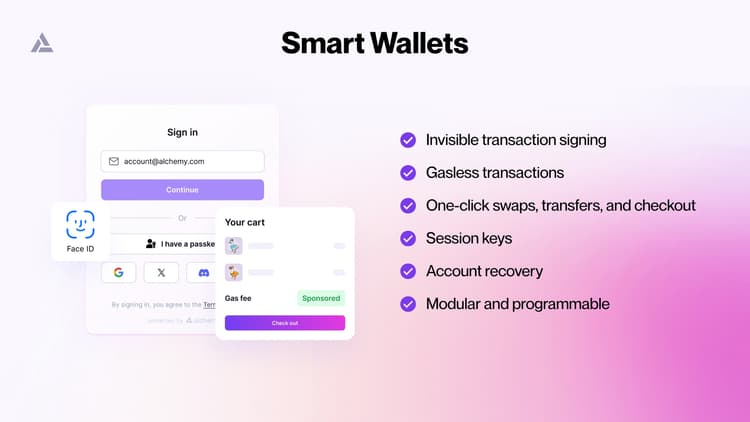
Best Ethereum wallets for developers: complete EVM guide (2025)
Complete 2025 developer guide to Ethereum wallets. Compare EOAs, smart wallets and more for your onchain app.

How to build on UTXO chains: Bitcoin, Litecoin, Dogecoin, and Bitcoin Cash
UTXO chains for developers: how Bitcoin, Litecoin, Dogecoin, and Bitcoin Cash differ from EVM, what infrastructure you need, and how Alchemy delivers it.

CyberConnect achieves massive scale using Alchemy's AA infra
CyberConnect is a web3 social network utilizing blockchain technology to empower users with ownership of their identity, content, and social data.
Privado ID alternatives
Explore web3 competitors and apps like Privado ID.
 Stripe Identity
 Verite
 zkMe
zkMe
 Civic
Civic
App store listings are independently reviewed and written by Alchemy using a combination of inbound submissions, editorial research, public project sources, and third-party directories, including ecosystem data from The Grid under the Open Database License, DefiLlama, DappRadar, Reown, and chain ecosystem pages.